

When it comes to how we eat, things can easily feel black and white: you're either plant-based or you're not. But the truth is, there’s a whole lot of space in between.
Plant-first eating is not a strict set of rules or a label you need to wear, it’s more of a flexible mindset. One that encourages you to build your meals around plants most of the time, while still leaving room for whatever else works for your body, lifestyle, or cultural background.
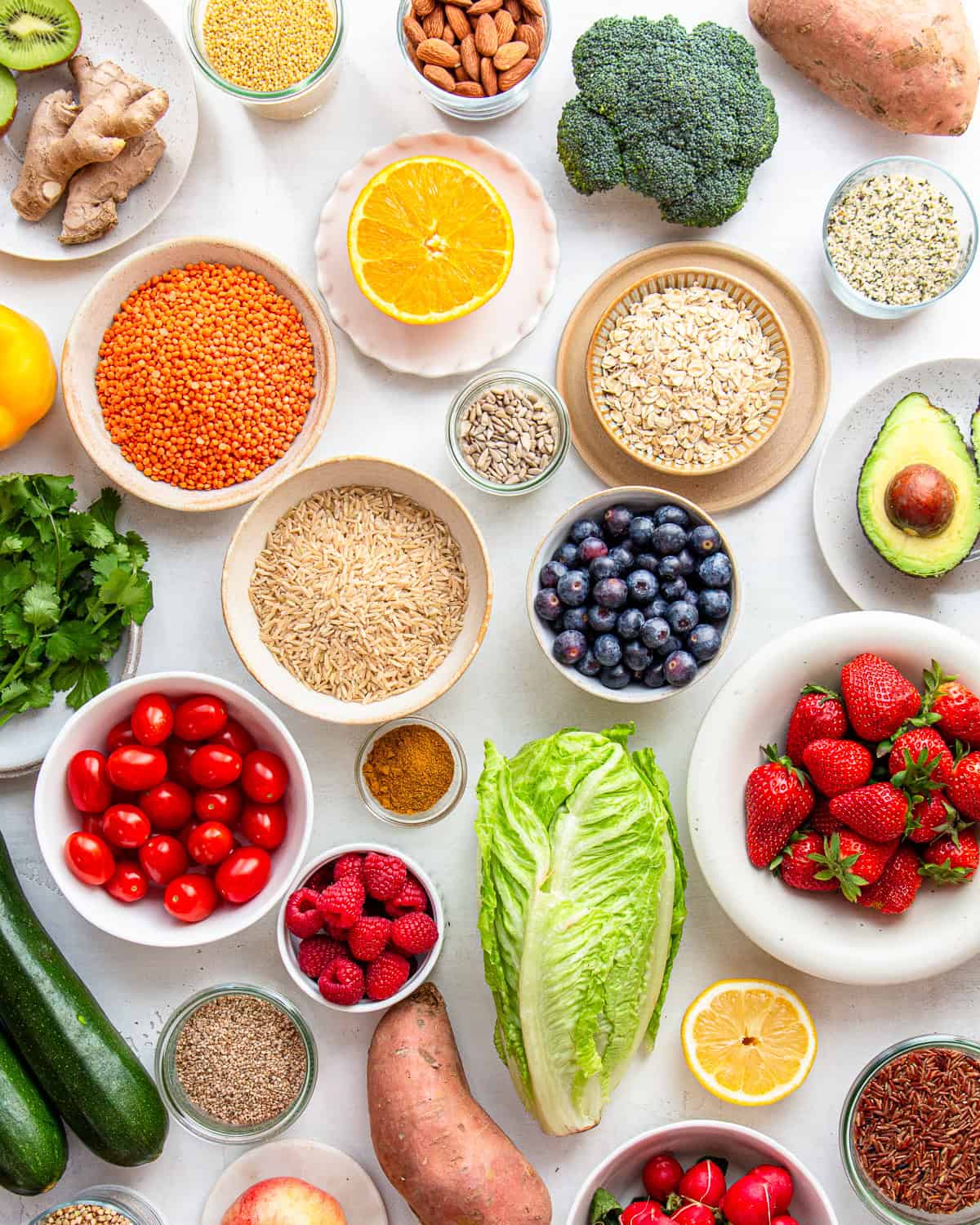
Defining plant-first eating
You won't find "plant-first" or "plant-forward" in the Oxford English Dictionary (yet), but these terms are gaining traction in the nutrition world.
Harvard Health describes plant-forward eating as focusing on foods primarily from plants, like fruits, veggies, nuts, seeds, whole grains, and legumes.
This approach doesn't mean eliminating meat or dairy entirely. Instead, plant-first eating is about prioritizing plants and fresh, whole foods while still leaving space for flexibility.
To put it into numbers, that could mean getting 60% to 90% of your food from plant sources. The remaining 10% to 40% are totally up to you and can include meat, fish, eggs, and dairy. Ideally, just opt for good-quality, minimally processed versions.
My (unintentional) plant-first journey
When I moved out and went to uni, I naturally began eating less meat because I didn’t crave it as much. I found myself learning how to cook with ingredients like tofu, tempeh, soy crumbles (aka TVP), hummus, and nutritional yeast (which became a pantry staple real quick 🧀).
It was never about going fully vegan, it just felt good, tasted great, and worked for my routine.
At the same time, I was studying Health Food Innovation Management. One course in particular, “Food and Nutrition in Health and Disease,” had me diving into study after study on the benefits of a plant-forward diet—like lower inflammation, better heart health, and reduced chronic disease risk
(Satija & Hu, 2018).
The more I learned, the more it reinforced what I was already experiencing in my own kitchen: eating more plants just made sense for my health, my energy, and even my budget.
An approach, not a label
Before we talk about the specifics of plant-first eating, it's important to me to clarify that "plant-first" is not just another diet label.
Plant-first isn’t about being perfect, following strict rules, or putting yourself in a box. It’s a flexible, plant-centric approach that doesn’t demand 100% compliance or commitment to a single way of eating.
Some people shy away from labels like "vegan" or "vegetarian" because they come with expectations and pressures, both from others and ourselves. And honestly? That totally makes sense.
A lot of us are still figuring out what works best for our bodies. Or maybe we're transitioning to a more plant-focused way of eating and aren’t ready to commit to a label. Or maybe a fully vegan diet just doesn’t feel aligned, even if we deeply care about animals and sustainability.
For me personally, calling myself "vegan" didn’t feel authentic. It felt like I was trying to squeeze into something that didn’t quite fit. Describing my diet as plant-first, however, feels genuine and true to how I eat.
Plant-first vs plant-based
Plant-based and plant-first both refer to plant-centric diets that do not necessarily exclude all animal products.
However, I have found that "plant-based" is often used synonymously with "vegan", meaning zero animal products. That's why I prefer the term plant-first, which highlights that plants are at the center of a diet without implying complete elimination of other food groups.
Key principles
Here are a few core ideas that guide plant-first eating:
- More variety. Stepping away from dietary extremes (like strict vegan or carnivore) opens you up to a broader range of foods. Since going plant-first, I've been way more intentional about rotating veggies, grains, legumes, nuts, and seeds. It’s fun, colorful, and super nourishing.
- Balanced plates. Even though plant-first meals may not look like a typical meal of meat, carbs, and veggies, having a good balance of protein, carbohydrates, and fats is key (and something I pay particular attention to when developing plant-first recipes).
- Limited ultra-processed foods (UPF). A key principle of plant-first nutrition is cooking mostly with fresh whole foods. Not saying you can never touch a vegan nugget again, but aim for real food most of the time. If you're curious about this topic, I highly recommend the book "Ultra-Processed People" by Chris van Tulleken.
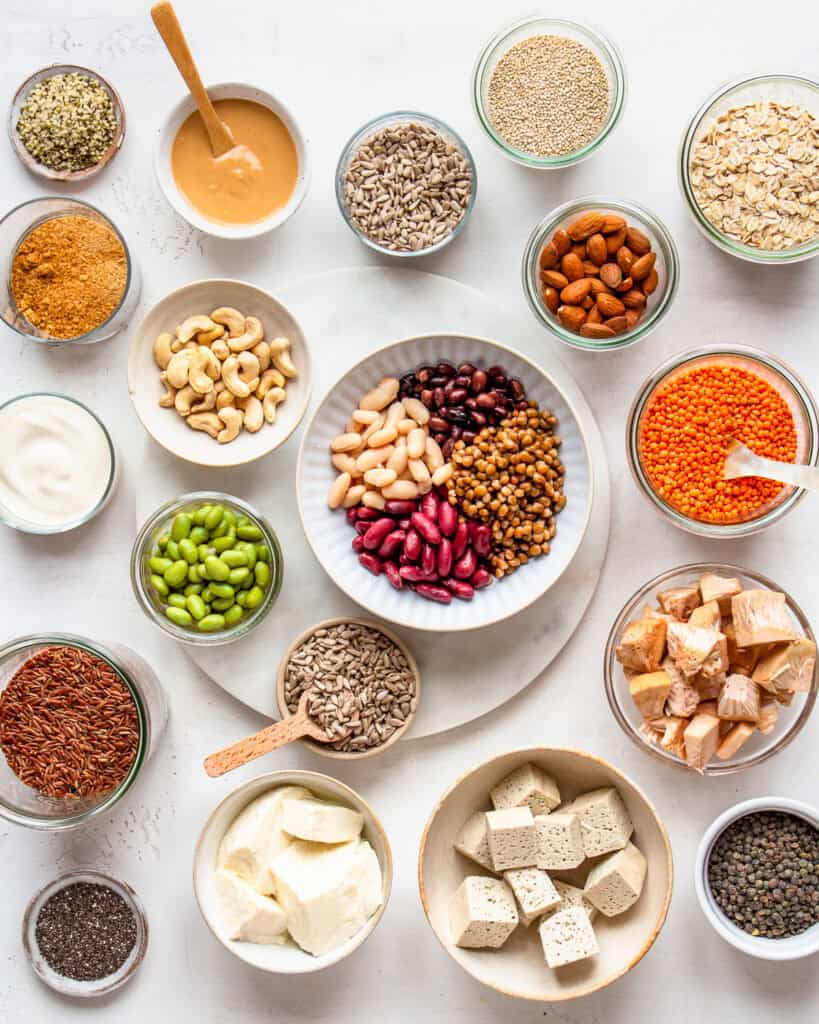
+ Printable chart!
The 20+ best plant-based protein sources
Grab my extensive list of the plant-based protein sources with >20 g of protein per 100 g dry weight.
Why Eat Plant-First?
- Health benefits. A plant-based diet is linked to higher fiber, lower saturated fat, and more essential vitamins and minerals. It’s also associated with a lower risk of heart disease, type 2 diabetes, and certain cancers. I highly recommend reading the recent study on plant-based diets by Wiśniewska et al. (2024), which summarizes the research on plant-based diets.
- Another meta-analysis even found that adherence to a plant-based diet was associated with a reduced risk of all-cause mortality, including decreases in cancer and cardiovascular disease mortality (Tan et al., 2024).
- More mindfulness. Eating more plant-based often promotes cooking from scratch and fosters mindful eating habits with a focus on nutrient-rich foods.
- Microbiome diversity. The American Gut Study (McDonald et al., 2018) found that people who eat 30+ different plants per week have a more diverse and healthier gut microbiome (i.e. the composition of microorganisms living in our digestive tract). A varied plant-first diet can thereby promote gut health.
How to hit 30 plants a week (aka counting "plant points")
Instead of just counting fruits and veggies (like the usual "5 a day" rule), look at a wider variety of plant foods that contribute to a healthy and diverse gut microbiome. The more variety, the better!
I like to use the SuperSix categories. Eating one item out of each of these 6 categories counts for one point, except herbs and spices, which count for ¼ point.
- Fruits 🍊
- Vegetables 🥒
- Wholegrains: wholegrain pasta, quinoa, rice, oats, millet
- Beans and pulses: red lentils, chickpeas, black beans, butter beans
- Nuts and seeds 🥜: almonds, cashews, 100% peanut butter, sunflower seeds, hemp seeds
- Herbs and spices: oregano, cilantro, basil, turmeric, ground ginger, cumin, cinnamon, and other spice mixes
➡️ Instead of reaching for an apple every afternoon, try switching it up with a pear one day, some grapes the next, maybe even a kiwi. Small swaps like these help you rack up those plant points without much effort.
Elo's tips to get started
- Stock up your pantry. Grains, legumes, nuts, seeds, condiments, and canned goods = the building blocks of easy meals. Grab my pantry list below if you need help!
- Introduce new foods one at a time. No need to go from zero to tofu overnight. Try For example, start by making homemade almond milk before introducing nutritional yeast, tofu, and tempeh into your diet.
- Learn some cooking basics to feel more confident in the kitchen and avoid making the same recipes over and over again. You can do this through workshops, tutorials, cookbooks, or blogs.
- Have a list of 10 go-to recipes to fall back on when you don't know what to cook. Include recipes that are quick and that use ingredients you always have on hand (like this zucchini dal).
- Find short-cuts. Cooking everything from scratch is unrealistic for most of us. You can rely on canned legumes, pre-cooked grains, and clean-ingredient hummus. I also really like 1-pot recipes and meal prep-friendly options to save time during the week.
- Do a little prep each week. Pick 1 to 3 things to prep. Start with seed bread, a pesto, and cook up a couple of grains for the week.

+ Printable PDF!
The ultimate vegan pantry staples list
Stock your kitchen like a pro! Grab my go-to pantry staples list organized by category and filled with plant-based essentials.


Did you like this recipe? Let me know!